

By Todd Doyle, author of Healing the Shattered: Surviving Narcissistic Abuse
Guilt after setting a boundary is common, and it doesn’t necessarily mean the boundary was wrong. Guilt is a feeling, not a verdict. In a relationship where your needs were treated as an inconvenience, almost any act of self-protection can trigger it—not because you did something unreasonable, but because you broke a pattern you were trained to maintain.
Understanding where that guilt comes from can help you hold the feeling without using it as a signal to take the boundary back.
Guilt can be trained, not just earned
In a relationship shaped by manipulation, guilt is sometimes a direct response to someone else’s reaction—a sigh, a cold silence, a comment about how disappointed they are. Over time, those reactions can condition you to associate almost any limit with wrongdoing, regardless of whether the limit itself is reasonable.
That conditioning doesn’t disappear the moment you recognize it. You can know, intellectually, that a boundary is fair and still feel guilty enforcing it. The feeling and the facts are not always in agreement.
Questions to separate guilt from wrongdoing
- Did I lie, deceive, or cause direct harm—or did I simply decline to do something?
- Would I judge a friend harshly for setting this same limit?
- Is this guilt about what I did, or about someone else’s reaction to what I did?
- Has this person made disagreement feel like betrayal before?
If the honest answer is that you declined something, protected your time, or said no to pressure, the guilt is more likely a trained response than an accurate signal that you did something wrong.
Guilt-tripping often follows a new boundary
New boundaries are frequently met with an attempt to restore the old pattern, and guilt is one of the more effective tools for that. A comment like “I guess I just can’t say anything to you anymore” or “after everything I’ve done for you” is designed to make the boundary itself feel like the offense. For a closer look at how that pressure works, see Guilt-Tripping in Relationships: When Guilt Becomes Pressure.
Recognizing the pattern doesn’t make the guilt disappear instantly. It does make it easier to notice when a feeling is being used as leverage rather than arising from an actual mistake.
What tends to help
Guilt usually fades faster with support than with solitude. Saying the boundary out loud to a trusted friend, a therapist, or a support group—and hearing that it sounds reasonable—can recalibrate a reaction that’s been shaped by one relationship’s unusual standards. Writing down what actually happened, in plain terms, can also make it easier to see the gap between the feeling and the facts.
It can also help to expect the guilt in advance rather than treat it as evidence the boundary was a mistake. A feeling that was predictable before you set the boundary is less likely to be new information about whether it was the right call.
Common questions
Does guilt ever mean I was actually wrong?
It can. Guilt isn’t always misleading—if a boundary genuinely harmed someone unfairly, guilt may be accurate. The distinction is usually whether you caused harm or simply withheld something the other person wanted.
How long does the guilt usually last?
This varies widely and isn’t something general information can predict for your situation. What’s more consistent is that guilt tends to soften with repetition—the first time you hold a boundary is often the hardest.
What if the guilt doesn’t go away at all?
Persistent guilt that doesn’t ease with time or support is worth bringing to a therapist, who can help assess whether something else is contributing to it.
More on this, from someone who’s been there
Guilt has a way of outlasting the boundary that caused it.
Guilt after a boundary is one of the more disorienting parts of recovery—understanding where it comes from is part of understanding what happened to you.
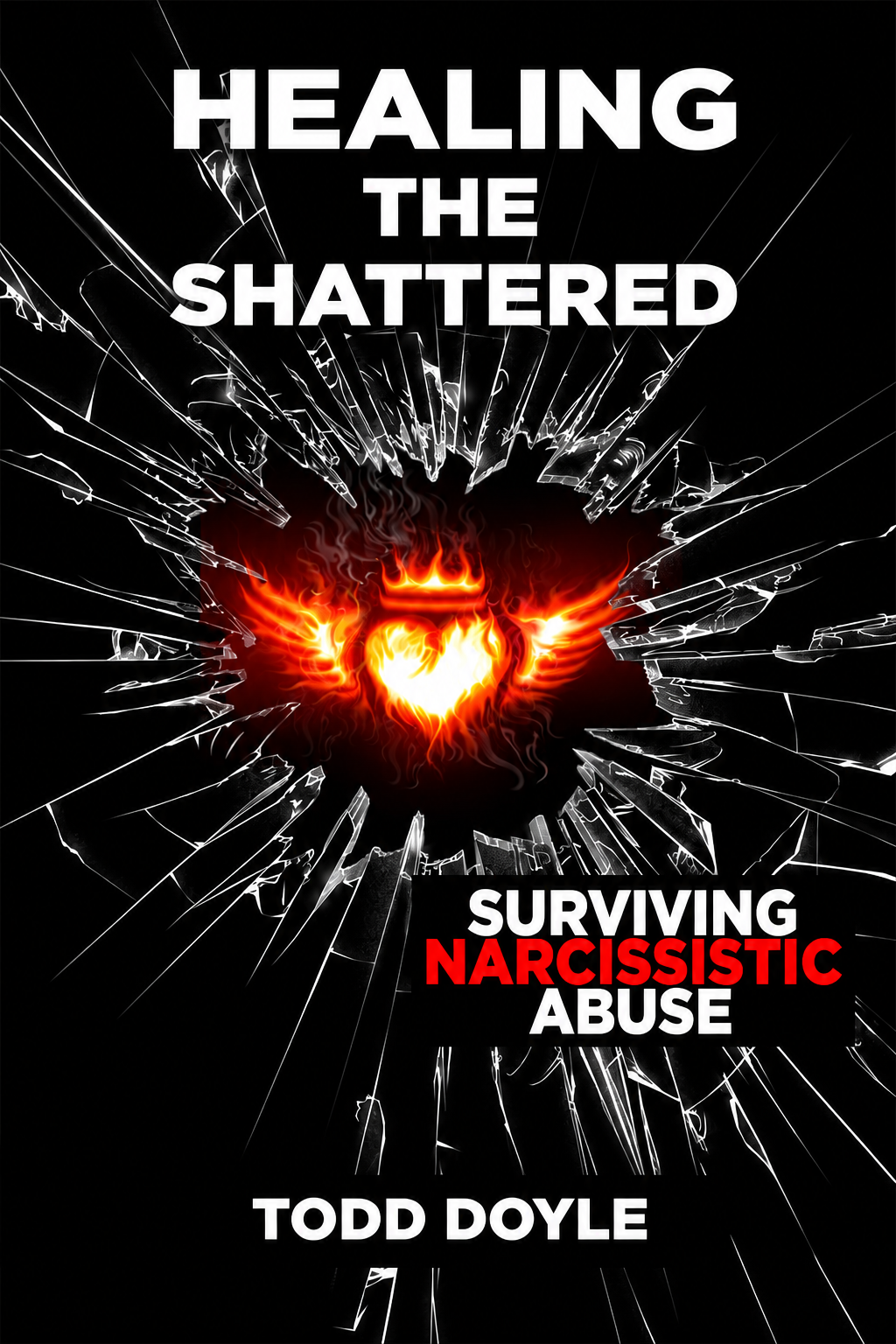
I write about guilt, and the longer recovery that follows it, at greater length in Healing the Shattered: Surviving Narcissistic Abuse — alongside DSM-5 material on narcissistic personality disorder and my own story. You’ll find it on Amazon, or you can order a signed copy straight from me.
This is general education, written from survivor experience rather than clinical training. It isn’t a substitute for your own therapist’s guidance.

 Buy Paperback on Amazon
 Buy Signed Copy • PayPal