

By Todd Doyle, author of Healing the Shattered: Surviving Narcissistic Abuse
Money decisions in a shared life require some coordination—that’s normal. The line between a reasonable financial boundary and financial control is usually about who retains access and choice, not about whether finances are discussed at all.
This article looks at where that line tends to fall, since the difference isn’t always obvious from the inside of the relationship.
A financial boundary
- Declining to co-sign a loan or open a joint account you’re not comfortable with.
- Keeping an individual account alongside shared finances.
- Saying no to lending money, even to a partner.
- Choosing not to disclose every purchase for approval.
These describe limits on your own financial participation. You retain access to your own money and the ability to make your own decisions about it, even within a relationship that shares some expenses.
Financial control
- Being required to ask permission before any purchase, including necessities.
- Having your paycheck taken, controlled, or redirected without your agreement.
- Being kept unaware of shared account balances or debts taken out in your name.
- Being discouraged or prevented from working, limiting your independent income.
These describe restrictions on your access, not limits you’ve chosen. The distinction matters because financial control is a recognized form of abuse, documented by the National Domestic Violence Hotline among other resources, precisely because it can make leaving a relationship financially difficult even after someone has decided to go.
Why financial control is effective
Limited access to money limits options. Someone who controls the finances in a relationship can make even basic independence—renting an apartment, hiring a lawyer, covering a deposit—difficult to arrange. That’s often the point, whether or not it’s framed that way at the time. Financial restriction can function as a quiet form of containment, independent of anything said directly about staying or leaving.
Signs worth paying attention to
- You don’t know the balance of a shared account, or don’t have access to check it.
- Debt has been opened in your name without your full knowledge or consent.
- Working, or working more hours, has been actively discouraged.
- Normal purchases require justification or approval that feels disproportionate.
Any one of these can have an innocent explanation in some relationships. A consistent pattern across several of them is what tends to distinguish genuine financial control from ordinary budgeting disagreements.
A possible boundary, when safe
“I’m keeping my own account that isn’t shared.” “I’m not comfortable co-signing that.” These describe decisions you’re making about your own finances. If you’re currently experiencing restricted access to money, income, or financial information, a domestic violence advocate or financial counselor who specializes in abuse can help you think through documentation and next steps more specifically than general information can.
Common questions
Is it controlling to discuss a budget together?
No. Shared budgeting by mutual agreement is different from one person dictating the other’s spending without input or access.
What if I don’t have access to my own money right now?
The National Domestic Violence Hotline (800-799-SAFE (7233) or text START to 88788) can help connect you with resources specific to financial abuse, including organizations that assist with rebuilding financial independence.
Does financial control always come with other forms of abuse?
Not necessarily, though it’s frequently part of a broader pattern. It’s worth taking seriously on its own even if other forms of control aren’t present.
Taking this further
Financial control rarely announces itself as abuse — it usually just looks like one more disagreement about money, repeated often enough to become a pattern.
Recognizing financial control for what it is—rather than an ordinary disagreement about money—is part of understanding what happened to you.
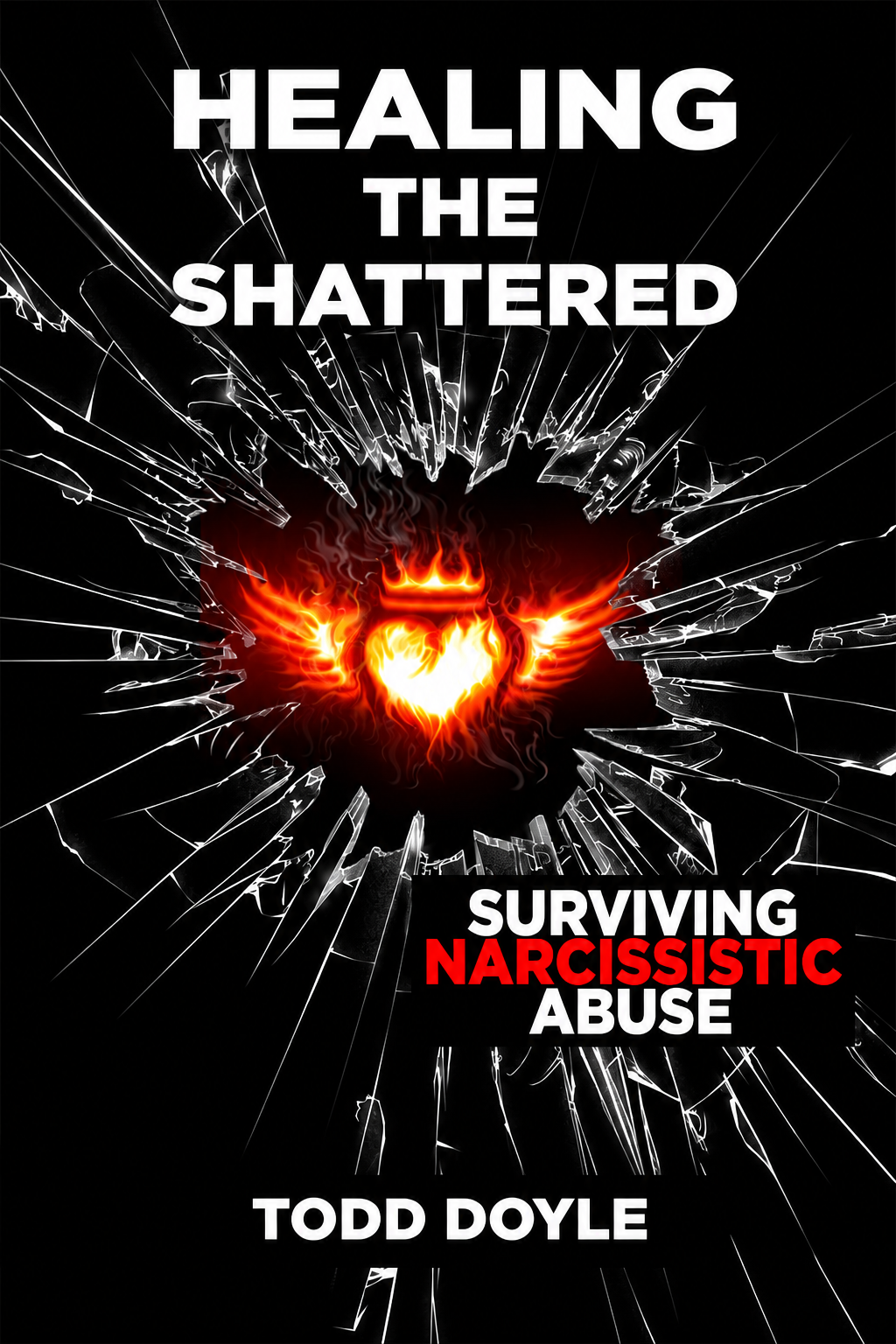
I go into financial control, and what rebuilding independence from it can look like, at greater length in Healing the Shattered: Surviving Narcissistic Abuse, alongside my own story and DSM-5 coverage of narcissistic personality disorder. It’s available on Amazon, and I also offer signed copies directly.
This article provides general education and a survivor’s perspective. It is not individualized financial or legal advice.

 Buy Paperback on Amazon
 Buy Signed Copy • PayPal