

“Psychopath” and “narcissist” get used almost interchangeably in everyday conversation, but they describe different things, and conflating them can actually make it harder to understand what you’re dealing with. Here’s the direct answer: narcissism and psychopathy are related but distinct concepts, with different clinical histories, different core features, and different levels of formal diagnostic standing.
Where each term actually comes from
Narcissistic Personality Disorder (NPD) is a formal diagnosis in the DSM-5, the diagnostic manual used by mental health professionals in the United States. Its core features center on a pervasive pattern of grandiosity, a need for admiration, and a lack of empathy, beginning by early adulthood and present across contexts.
“Psychopathy,” by contrast, is not itself a DSM-5 diagnosis. It’s a clinical and research construct most closely associated with tools like the Psychopathy Checklist, used primarily in research and forensic settings rather than as a standalone diagnosis you’d receive from a general therapist. The closest DSM-5 diagnostic category is Antisocial Personality Disorder, which overlaps with but isn’t identical to psychopathy as researchers define it.
That’s an important distinction on its own: one of these terms has a specific clinical definition most people can look up and compare against; the other is often used informally in ways that don’t map cleanly onto any single diagnostic category.
Overlapping features, different emphasis
Both narcissism and psychopathy, as clinical constructs, can involve a reduced capacity for empathy and a willingness to exploit others. That overlap is probably why the terms get blended in casual conversation. But the emphasis differs in meaningful ways.
Narcissism, in its clinical sense, centers heavily on self-image: grandiosity, need for admiration, and sensitivity to criticism or perceived slights. Much of the harmful behavior associated with narcissism can be understood, at least in part, as protecting a fragile or inflated self-image.
Psychopathy, as researchers describe it, centers more on a broader pattern of callousness, impulsivity, and a diminished emotional response to other people’s distress — not necessarily organized around protecting a self-image at all. Someone high in psychopathic traits, in the research sense, may be far less invested in how they’re perceived than someone whose behavior is driven primarily by narcissistic needs.
Why the distinction matters for a survivor
I’m not a clinician, and nothing here is meant to diagnose anyone — not a partner, an ex, or a family member. But understanding that these are different constructs matters for a practical reason: it affects what kind of behavior you might expect, and what kind of explanation actually fits what you experienced.
If someone’s harmful behavior seems tightly tied to their self-image — explosive reactions to criticism, constant need for validation, difficulty tolerating being wrong — that pattern maps more closely to what’s described clinically as narcissistic. If the behavior seems less about self-image and more about a general lack of emotional response to causing harm, calculated manipulation without much visible investment in how they’re seen, that maps closer to the research description of psychopathy.
These aren’t mutually exclusive, and plenty of harmful behavior doesn’t need a precise label at all to be worth taking seriously. The label isn’t the point. What matters is whether the pattern is real, whether it’s repeating, and whether it’s affecting your life — not which specific clinical term best captures it.
A caution about armchair labeling
It’s tempting, especially online, to confidently assign one of these labels to someone in your life. I’d encourage real caution here. Neither term is something that can be responsibly applied from the outside, based on a handful of behaviors, by someone without clinical training. A real diagnosis requires a trained clinician, direct assessment, and far more information than any single relationship can provide from one side.
What you can do, without needing a clinical label at all, is pay attention to patterns: does explaining your perspective ever seem to land, or does it get absorbed and redirected every time? Does accountability ever show up as changed behavior, or only as temporary words? Those questions are often more useful than the search for the “correct” clinical term, because they focus on what’s actually happening rather than on a label you likely can’t verify.
Where this leaves you
If you came here trying to decide whether someone in your life is “a narcissist” or “a psychopath,” it may help to set that specific question aside. Both terms describe real, researched patterns, but neither is yours to assign from the outside, and the distinction between them matters more to clinicians and researchers than it does to your actual safety or well-being.
What matters more is whether the behavior you’re experiencing is real, repeated, and harmful — and whether you have support that takes your account of it seriously, regardless of which clinical term, if any, eventually turns out to fit.
Why these labels sometimes get used as weapons
I’ve noticed, both in my own experience and in talking with other survivors, that these terms sometimes get picked up and used as ammunition rather than as honest attempts at understanding. Someone accuses an ex of being “a narcissist” in a custody dispute, or a family argument turns into a contest over who can produce the more damning label for the other person.
That use of the terms worries me, separate from the clinical question entirely. A real pattern of harm doesn’t need an impressive-sounding diagnosis to be valid, and a diagnosis-shaped accusation isn’t the same as documented behavior a court, a therapist, or anyone else can actually evaluate. If you’re in a legal process where this distinction matters, that’s a conversation for a qualified attorney and, where relevant, a licensed clinician — not something to settle with an online checklist.
A note on “types” within narcissism itself
One more layer of confusion worth naming: even within narcissism as a clinical concept, researchers distinguish between presentations sometimes called “grandiose” and “vulnerable” narcissism. Grandiose presentations tend to look confident, dominant, and overtly self-important. Vulnerable presentations can look more defensive, easily wounded, and quick to frame themselves as the injured party — which can make the underlying pattern harder to spot from the outside, since it doesn’t match the stereotype most people picture.
I mention this because survivors sometimes doubt their own experience specifically because what they lived through didn’t look like the loud, obviously grandiose stereotype. If what you experienced felt more like constant fragility, defensiveness, and being cast as the one causing harm whenever you raised a concern, that doesn’t mean it wasn’t a real and damaging pattern — it may just mean it didn’t match the most commonly pictured version of the label.
None of this is a substitute for a real clinical opinion where one is actually needed. It’s meant to do something smaller: help you hold these terms a little more loosely, and focus more on the actual pattern of behavior in front of you than on winning an argument about which word best describes the person causing it.
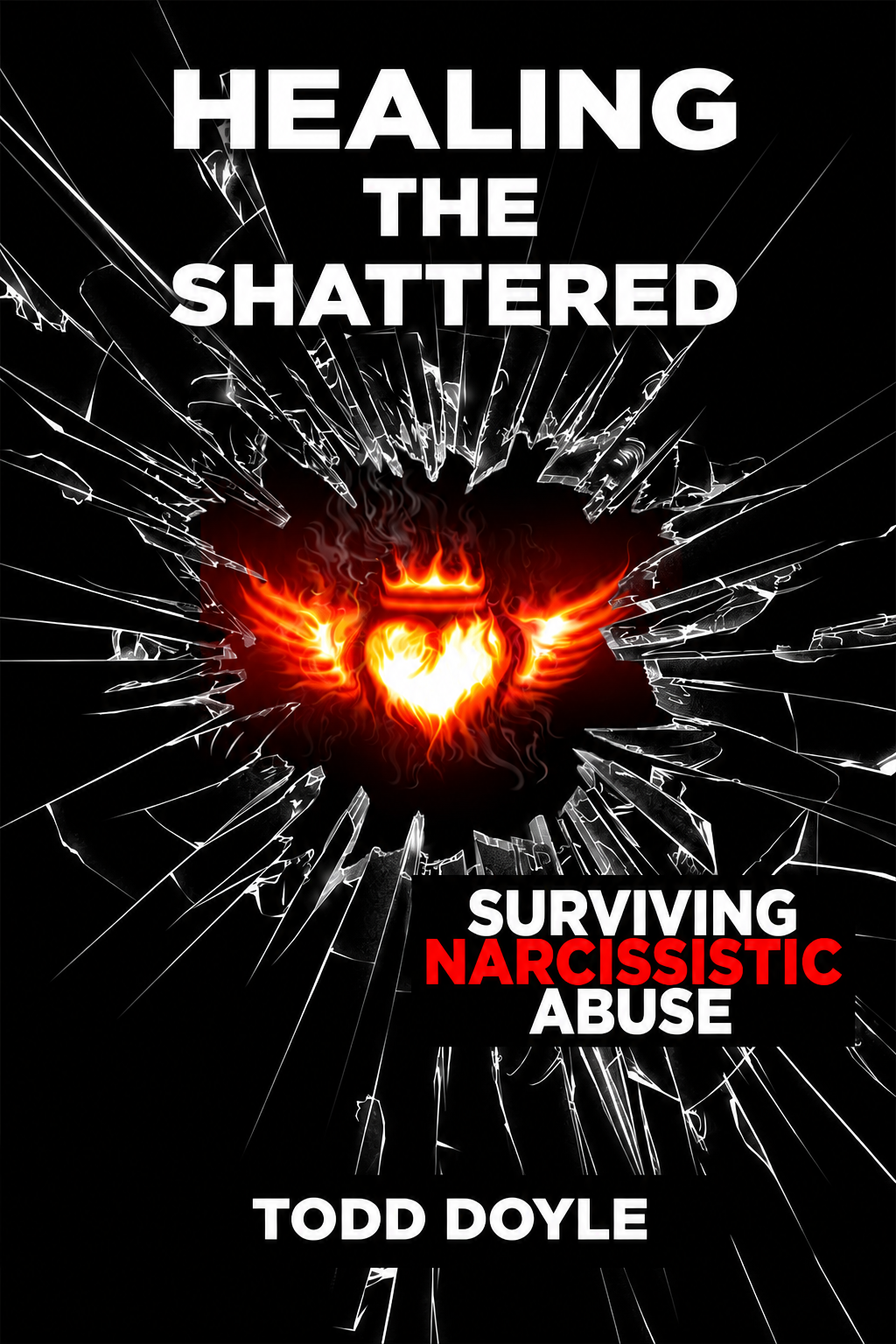


 Buy Paperback on Amazon
 Buy Signed Copy • PayPal