

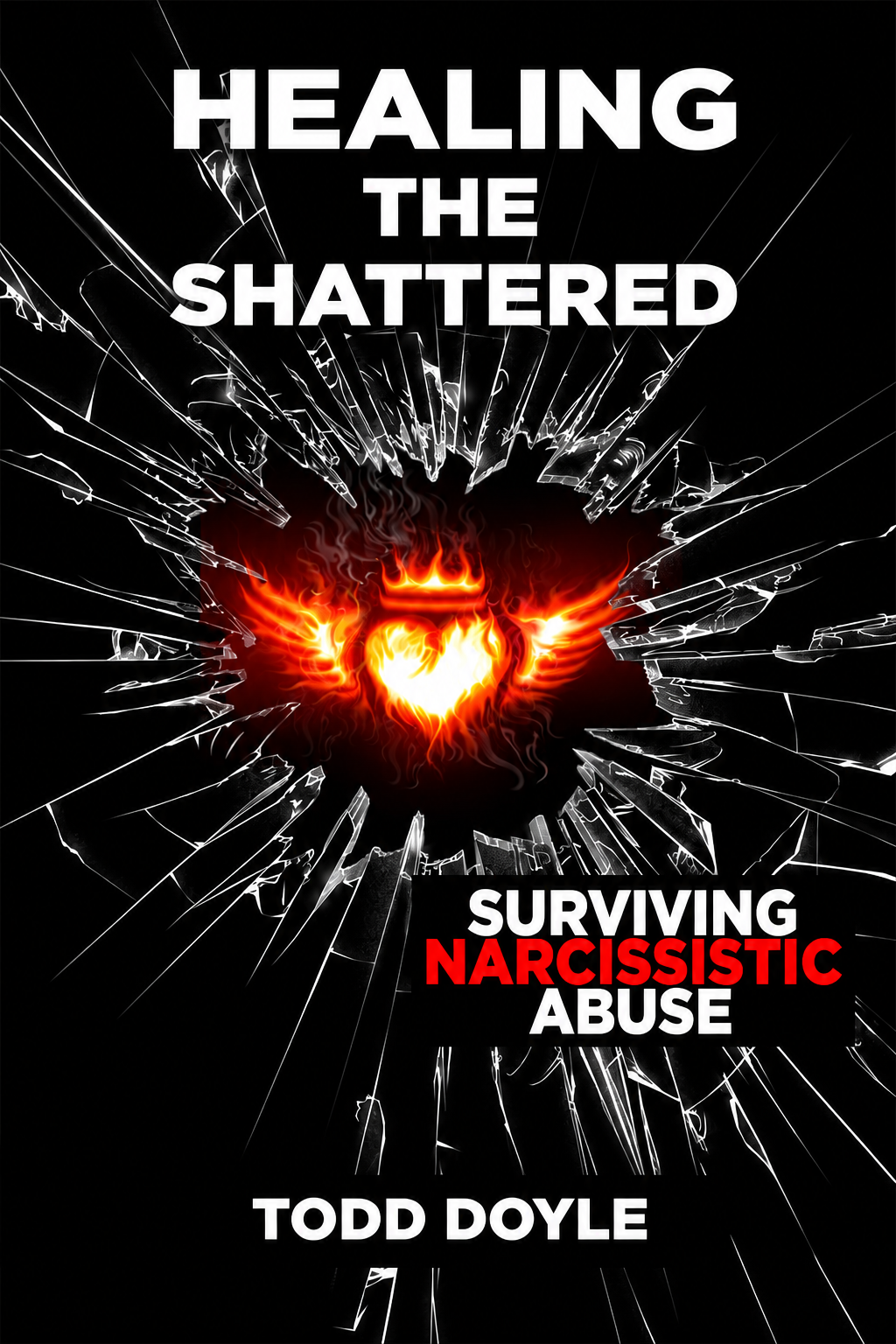
By Todd Doyle, author of Healing the Shattered: Surviving Narcissistic Abuse
“Narcissistic” gets used two different ways, and the difference matters. Sometimes it describes a personality trait, a degree of self-focus or need for admiration that most people have at least a little of. Sometimes it refers to Narcissistic Personality Disorder (NPD), a specific clinical diagnosis. Confusing the two can make it harder to talk about what you are actually experiencing.
Narcissistic Traits
Traits like wanting admiration, overestimating your own abilities, or struggling to take criticism well exist on a spectrum, and most people show some of them sometimes, especially under stress or insecurity. Having a trait is not the same as having a disorder, and it does not, by itself, explain abusive behavior.
Narcissistic Personality Disorder
NPD is a diagnosis that requires a mental health professional’s evaluation against specific clinical criteria: generally a persistent pattern across many areas of life, not an occasional behavior. Mayo Clinic describes a diagnostic process that includes psychological assessment and consideration of DSM-5 criteria. A diagnosis is not something that can be made from the outside, by a partner, a friend, or an article, however closely someone’s behavior matches a description.
Why This Distinction Matters for You
If you are trying to make sense of a harmful relationship, you do not need to establish that the other person has NPD before taking your own experience seriously. Focus on specific behavior: are you being belittled, controlled, manipulated, or pressured in ways that harm you? That question can be answered from your own experience. A diagnosis, if one is ever made at all, belongs to a professional evaluation of the other person, not to you.
What Is Not Accurate to Say
It is not accurate to diagnose a specific person based on a list of traits, to assume everyone with narcissistic traits is abusive, or to assume NPD is simply treated with medication. There is no medication that treats NPD directly. Treatment, when someone seeks it, typically involves long-term psychotherapy, and even then, change depends on that person’s own sustained effort, not on anything you do.
For more on recognizing the pattern of behavior itself, see What Is Narcissistic Abuse? Patterns, Effects, and Getting Support.
This article provides general education and a survivor’s perspective. It does not diagnose another person or replace individualized mental health care or safety planning.

 Buy Paperback on Amazon
 Buy Signed Copy • PayPal