

By Todd Doyle, author of Healing the Shattered: Surviving Narcissistic Abuse
Privacy in a relationship isn’t the same thing as secrecy. You can share a life with someone, build trust with them, and still keep your own passwords, your own phone, and your own private conversations. A demand for full access to those things—framed as proof of honesty—is one of the more common privacy boundaries survivors describe wrestling with.
This article looks at what a privacy boundary actually covers, and how it differs from the kind of concealment that genuinely damages trust.
What privacy boundaries typically cover
- Your phone, email, and social media passwords.
- Conversations with friends, family, or a therapist.
- Your location when you’re not doing anything that affects the relationship.
- Personal journals, messages, or photos that don’t involve the other person.
A privacy boundary says: I will not hand over blanket access to these things on demand. It does not require deception. You can hold a privacy boundary while still being honest about your actions—those are two separate questions.
“If you have nothing to hide” is not a fair test
One of the most common pressures around privacy is the idea that refusing access proves guilt. By that logic, no one has a right to any privacy at all, since the same argument could demand access to anyone’s phone, mail, or diary. Privacy is not evidence of wrongdoing. It’s a normal part of being a separate person inside a relationship.
In relationships marked by control, demands for full digital access often escalate over time—from “just let me see one message” to checking your phone daily—and can become a method of monitoring rather than an isolated request for reassurance.
Where privacy and honesty actually overlap
Most relationship problems framed as “privacy issues” are really honesty issues. If you’re being deceptive about something that materially affects your partner—an affair, a hidden financial decision that affects shared finances—the issue is the deception, not privacy itself. You can address dishonesty directly without surrendering access to every private account and conversation you have.
Separating the two questions—”am I being honest” versus “do I owe unrestricted access”—can make it easier to hold a privacy boundary without feeling like you’re hiding something you’re not.
A possible boundary, when safe
“I’m willing to talk honestly about anything that concerns our relationship. I’m not willing to hand over my passwords or let you read my messages.” This describes an action you control—declining to share access—rather than demanding the other person stop asking. For more on that distinction, see Setting Boundaries After Narcissistic Abuse.
If monitoring has escalated to tracking your location, checking your devices without consent, or restricting who you can contact, that pattern may extend beyond privacy into coercive control, and the Domestic Violence and Narcissistic Abuse article and a domestic violence advocate are better starting points than a boundary conversation alone.
Common questions
Is it reasonable to share some information, just not everything?
Yes. Privacy boundaries aren’t all-or-nothing. Many people are comfortable sharing some things and not others; what matters is that the choice is yours, not extracted under pressure.
What if my partner says privacy boundaries mean I don’t trust them?
Trust and privacy aren’t opposites. Plenty of trusting relationships include two people who each keep their own phone private. A demand framed as “if you trusted me, you’d show me everything” is worth examining rather than automatically accepted.
What if they already went through my phone without permission?
That’s a boundary violation worth naming directly, and if it happens repeatedly despite being named, it may be part of a larger pattern worth discussing with a therapist or advocate.
If you want to go further into this
Privacy is one of the quieter battlegrounds in a controlling relationship, and it deserves more than a short list of rules.
Understanding what privacy you’re entitled to—and what pressure looks like when it’s disguised as a request for honesty—is part of a larger process of protecting yourself.
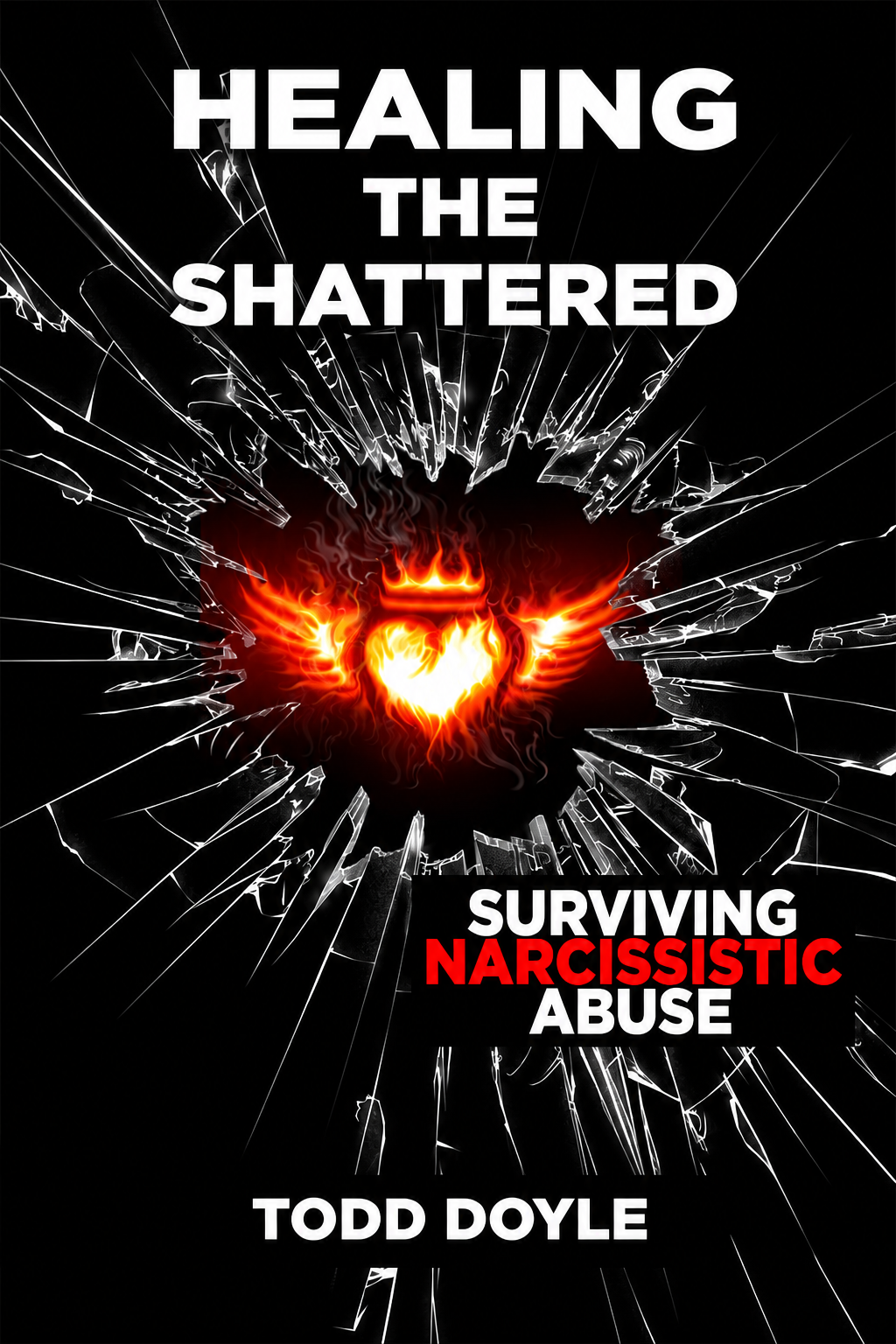
Healing the Shattered: Surviving Narcissistic Abuse covers this ground in more depth, alongside DSM-5 coverage of narcissistic personality disorder and my own account as a survivor. It’s sold as an Amazon paperback, and signed copies are available directly from me.
This article is general education and a survivor’s perspective, not a diagnosis of anyone else or a replacement for individual counselling or legal advice.

 Buy Paperback on Amazon
 Buy Signed Copy • PayPal