

By Todd Doyle, author of Healing the Shattered: Surviving Narcissistic Abuse
Setting boundaries after narcissistic abuse begins with identifying the behavior that harms you, deciding what you can safely do in response, and getting support to follow through. A boundary describes your limits and your actions. It cannot guarantee another person’s cooperation or stop their abuse.
That distinction matters when you have spent a relationship trying to find the words that will finally make someone understand.
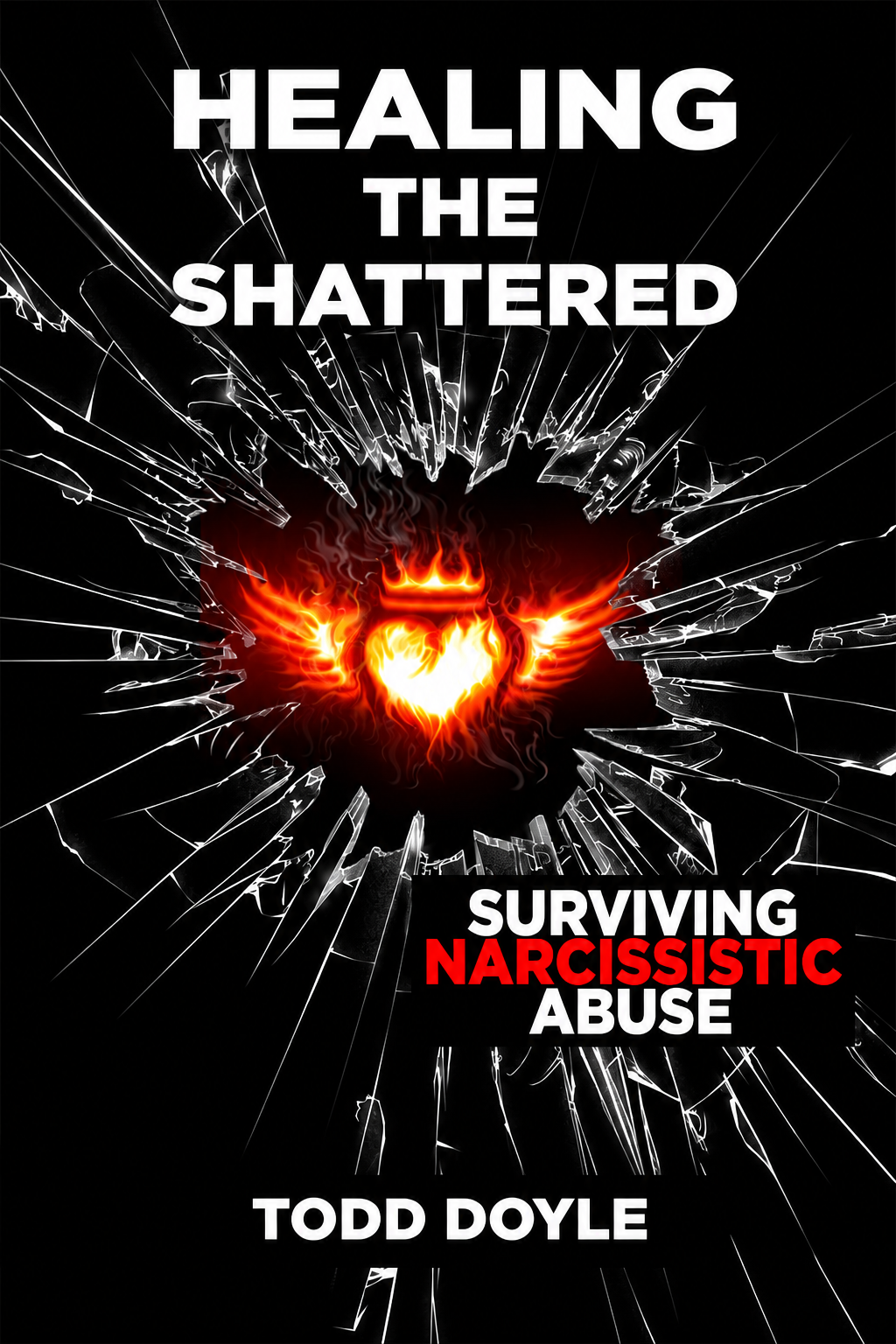
I wrote Healing the Shattered: Surviving Narcissistic Abuse from my own experience as a survivor. That is the perspective I bring here: a person’s dignity, safety, and self-worth deserve attention alongside the effort they put into a relationship.
You do not have to persuade someone that your pain matters before seeking help or protecting yourself.
Focus on the behavior, even without a diagnosis
People often use “narcissistic abuse” to describe manipulation, humiliation, exploitation, and controlling behavior associated with narcissistic traits. However, recognizing harmful behavior does not establish that someone has narcissistic personality disorder.
NPD is a clinical diagnosis requiring professional evaluation. Mayo Clinic describes a diagnostic process that includes psychological assessment and consideration of DSM-5 criteria.
For deciding whether you need a boundary, focus on what is happening:
- Are you being insulted or repeatedly belittled?
- Is your privacy being invaded?
- Are you pressured to surrender control over your time, money, or relationships?
- Does expressing a need lead to threats, intimidation, or punishment?
You can take those behaviors seriously without first proving a diagnosis.
Put safety before confrontation
Before announcing a boundary, consider how the other person may respond.
If they have threatened you, blocked your exit, stalked you, monitored your communications, or used violence, a direct confrontation may increase danger. You do not owe someone an announcement of every step you take to protect yourself.
The National Domestic Violence Hotline offers individualized safety-planning resources. Responsibility for abusive behavior belongs to the person choosing that behavior.
In the United States, you can call 800-799-SAFE (7233) or text START to 88788 to connect with the Hotline. If your device may be monitored, use a safer device when possible. In an immediate emergency, call 911.
The examples below are options to adapt when safe. They are not instructions to confront someone who may retaliate.
1. Identify the specific limit you need
“Treat me better” expresses a real need, but it can be difficult to translate into action. Start with one specific behavior.
For example:
- “I need conversations without insults.”
- “I need uninterrupted time to sleep.”
- “I need control over what personal information I share.”
- “I need communication about our children to stay focused on their needs.”
Choose the limit that would make the most meaningful difference right now. You do not have to resolve every problem at once.
Ask yourself:
What keeps happening, how does it affect me, and what response is available to me?
That last question matters. Your options may be shaped by housing, finances, disability, children, or safety concerns. A useful boundary must account for your circumstances.
2. Make the boundary about an action you control
A request asks someone else to change their behavior:
“Please stop insulting me.”
A boundary identifies what you will do if the behavior continues:
“If the conversation becomes insulting, I will end the call.”
The request may be reasonable. The boundary gives you a response that does not depend on receiving an apology or agreement.
| Situation | Possible boundary, when safe |
|---|---|
| Insults during a phone call | “If you call me names, I will end the call.” |
| Pressure to answer immediately | “I will respond when I am available.” |
| Demands for private information | “I am keeping that information private.” |
| Repeated arguments by text | “I will respond to practical questions. I am ending this argument.” |
Avoid consequences you cannot safely carry out. A small, realistic action is more useful than a dramatic promise made under pressure.
3. Communicate briefly and clearly
When it is safe to communicate a boundary, use plain language. Name the limit without turning the conversation into a debate about the other person’s character.
For example:
“I’m willing to discuss the problem. I’m not willing to continue while I’m being insulted.”
You may feel an urge to explain every reason, defend your intentions, or prove that you are being fair. Consider whether more explanation is helping—or simply giving the conversation more opportunities to move away from the original issue.
A boundary can be respectful and brief.
For additional examples, read my article, Boundary Scripts for a Narcissist: Exactly What to Say.
4. Prepare for pressure without treating it as proof you are wrong
Someone may disagree with your boundary. They may call you selfish, demand an exception, or insist that your limit means you do not care.
Their reaction does not, by itself, determine whether your boundary is reasonable.
Before the conversation, decide how you will respond to repeated pressure. When safe, that might mean repeating one sentence:
“I understand that you disagree. My decision remains the same.”
It may also mean ending the exchange rather than continuing to explain.
Pay attention to what happens over time. Does the person respect the limit, even when disappointed? Or do they repeatedly punish you for having it?
A promise to change and a sustained change in behavior are different things.
5. Build support for following through
Following through can be difficult when you share a home, finances, children, or a long emotional history. Difficulty does not mean you are weak or responsible for the abuse.
A trusted person, therapist, or domestic violence advocate may help you assess your options and plan a manageable next step.
Support can be practical:
- Arranging a safe place to make a call.
- Identifying someone you can contact after a difficult interaction.
- Planning how to obtain professional advice privately.
- Working out what to do if a boundary triggers threats or retaliation.
If you cannot act on a boundary today, focus on increasing your options. Protection does not have to begin with a confrontation.
6. Understand what boundaries can—and cannot—accomplish
Boundaries can help you clarify your limits, reduce some forms of unwanted contact, and make decisions about what you will participate in.
They cannot make someone empathetic, guarantee your safety, or transform an abusive relationship into a healthy one.
You are not responsible for finding a perfect sentence that makes another person stop harming you. The responsibility to stop belongs to them.
If a boundary is repeatedly ignored, the next question may be less about wording and more about what support, distance, or protection you need.
A simple boundary exercise
When it is safe and private to do so, complete these four sentences:
- The behavior I need to address is: ________
- The limit I want to set is: ________
- The action I can safely take is: ________
- The person or resource that can support me is: ________
For example:
“The behavior is name-calling during phone conversations. My limit is that I will not participate in insulting exchanges. My action is to end the call. My support is a trusted friend I can contact afterward.”
Keep written notes only where they will not put you at greater risk if discovered.
Common questions about boundaries and narcissistic abuse
Do I need the other person to agree?
You can decide your own limits without their approval. However, your ability to act on those limits may require planning and support, especially in a controlling or dangerous relationship.
What if setting a boundary makes things worse?
Prioritize safety. You do not have to repeat a confrontation to prove consistency. Seek help assessing the risk and identifying safer options.
What if I give in?
Revisit the circumstances without blaming yourself. Was the action realistic? Were you afraid? Did you need support that was unavailable?
Adjusting a plan is different from deciding that you no longer deserve protection.
Can boundaries save the relationship?
Boundaries alone cannot repair abuse. A healthier relationship requires the other person to take responsibility and sustain changes in their behavior. Your safety should not depend on waiting for that change.
Continue with Healing the Shattered
Understanding boundaries is one part of understanding what happened to you and finding a path forward.
In Healing the Shattered: Surviving Narcissistic Abuse, I bring together my survivor story, DSM-5 coverage of narcissistic personality disorder, and pathways for healing.
If my survivor-to-survivor perspective speaks to you, explore the book and choose an Amazon paperback or a signed copy directly from me.
You deserve information and support whether or not you choose to buy the book.
This article provides general education and a survivor’s perspective. It does not diagnose another person or replace individualized mental health care or safety planning.

 Buy Paperback on Amazon
 Buy Signed Copy • PayPal