

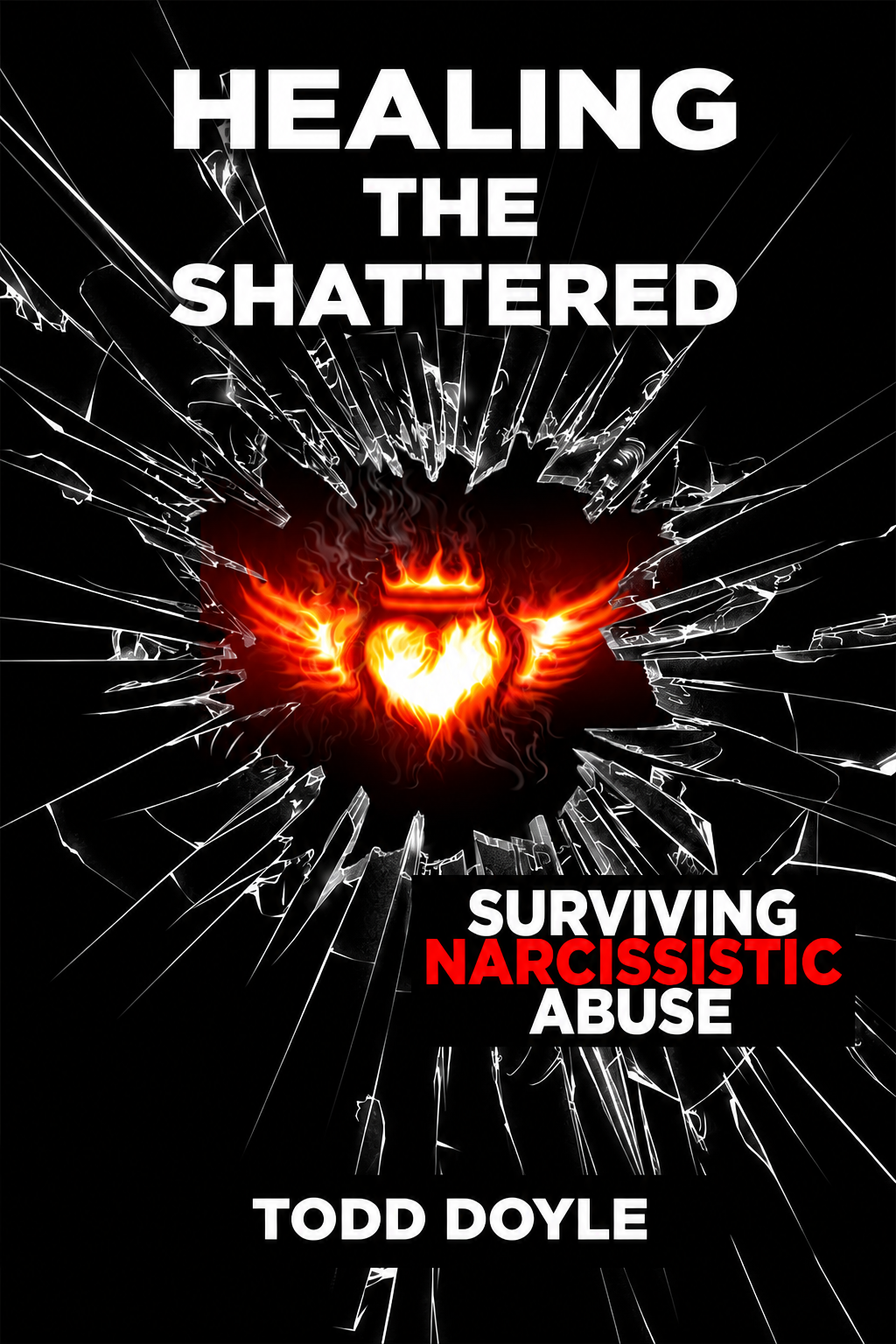
By Todd Doyle, author of Healing the Shattered: Surviving Narcissistic Abuse
One of the more disorienting parts of an abusive relationship is the gap between how someone behaves in private and how they present in public. Friends, family, even acquaintances may describe the same person as charming, generous, or easygoing, while your private experience looks nothing like that description.
Why This Happens
Public charm and private control are not necessarily in conflict for the person doing it. Being well-regarded publicly can actually support the private behavior, by making it harder for you to be believed if you ever describe it, and by giving the person a reputation that acts as cover. For some people, the public performance isn’t even separate from the private behavior; both are forms of managing how they’re perceived, one aimed at an audience, one aimed at control.
Why This Is So Disorienting
When everyone around you describes a different person than the one you live with, it is natural to start doubting your own perception rather than questioning the discrepancy itself. This is one reason survivors frequently describe feeling like they are “going crazy,” even when nothing is wrong with their perception at all. The gap itself, not just the private behavior, is part of what makes this so destabilizing.
A Specific Pattern Worth Naming: Reputation as a Shield
Some people deliberately build and maintain a strong public reputation, generous, well-liked, pillar of the community, specifically because it functions as protection. If you ever do describe what actually happens privately, the gap between that reputation and your account can make people assume you’re exaggerating, mistaken, or have some ulterior motive, rather than questioning the reputation itself. This isn’t a reason to stay silent; it’s useful to understand going in, so the disbelief, if it happens, doesn’t land as proof you were wrong.
What Can Help
- Trust the pattern you actually experience directly, over the reputation someone has with people who do not see that side.
- If you do choose to tell someone, know that disbelief often reflects how convincing the public performance is, not how credible you are.
- Documenting specific incidents as they happen (see Documenting Abuse Safely) can help you hold onto your own clear account even when the public narrative contradicts it.
- A therapist or domestic violence advocate has likely heard this exact dynamic before, and can offer perspective without needing to have witnessed it themselves.
See What Is Narcissistic Abuse? Patterns, Effects, and Getting Support for more on this pattern.
This article provides general education and a survivor’s perspective. It does not diagnose another person or replace individualized mental health care or safety planning.



 Buy Paperback on Amazon
 Buy Signed Copy • PayPal