

By Todd Doyle, author of Healing the Shattered: Surviving Narcissistic Abuse
Most advice about boundaries assumes some distance is already available—a door you can close, a call you can end, a place you can go afterward. Living with someone removes that cushion. The boundary still matters, but the way you hold it has to account for the fact that you’ll see this person again in an hour, not next week.
This article is deliberately general, because a shared home changes the safety calculation in ways that depend heavily on your specific circumstances. Where individualized planning is needed, that’s noted directly rather than guessed at.
Safety comes before the wording of the boundary
Before deciding how to phrase anything, it’s worth considering whether a direct boundary conversation is safe to have at all in a shared living space. If there’s a history of physical violence, threats, or escalation when challenged, a verbal boundary delivered in the moment may not be the right first step. The National Domestic Violence Hotline (800-799-SAFE (7233) or text START to 88788) can help assess that specific to your situation, which general information like this can’t do responsibly.
What’s realistic to expect from a shared-home boundary
In a shared space, a boundary often has to be narrower and more mechanical than it would be elsewhere—less about a conversation and more about a physical or logistical change you can make unilaterally: which room you use for work calls, what time you go to bed regardless of whether an argument is resolved, declining to engage once you’ve said you’re done for the night.
These are smaller than the boundaries covered in Setting Boundaries After Narcissistic Abuse, but the underlying principle is the same: it’s an action you take, not a change you’re requesting from someone else.
Reducing exposure where you can
Without being able to leave the space, some people find it more sustainable to reduce the surface area for conflict rather than negotiate every boundary directly—keeping conversations shorter, limiting topics discussed at home, spending more time away during the day when that’s an option. This isn’t a long-term solution to an unsafe relationship, and it isn’t meant to be one. It’s a way of getting through a period where leaving isn’t immediately possible.
When living together is itself the unresolved question
Sometimes the boundary that actually needs attention isn’t about phone calls or bedtime—it’s about whether staying in the home is sustainable at all. That’s a much larger decision, tied to finances, housing, children, and safety, and it deserves more than a blog article can responsibly offer. A domestic violence advocate can help you think through options, including temporary housing resources, while you decide what’s next.
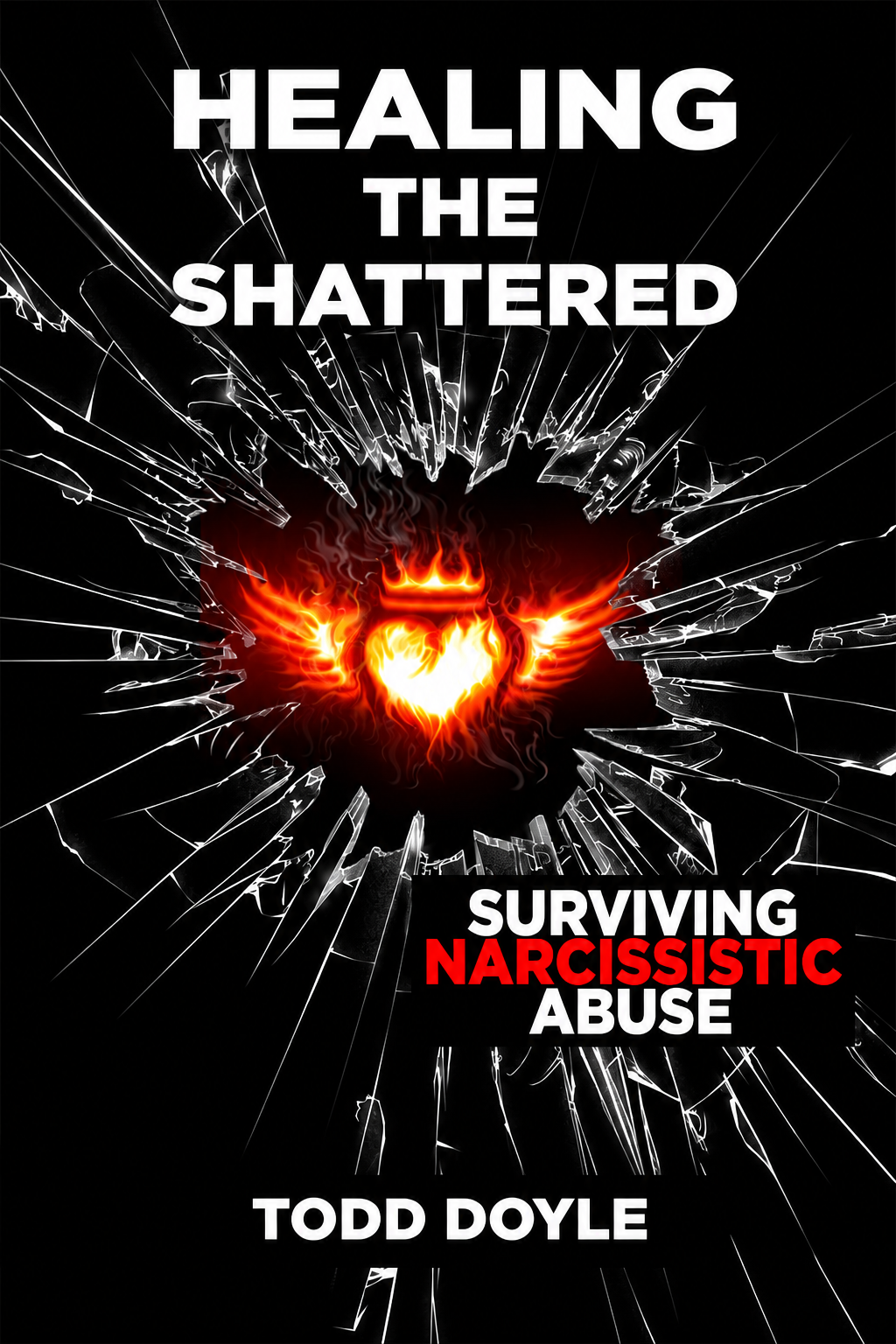
Healing the Shattered: Surviving Narcissistic Abuse includes my own account of navigating exactly this kind of constrained situation, alongside DSM-5 coverage of narcissistic personality disorder—available on Amazon or as a signed copy direct from me.
This article offers general education and should not be used as a substitute for individualized safety planning with a domestic violence advocate, particularly in a shared household.

 Buy Paperback on Amazon
 Buy Signed Copy • PayPal