

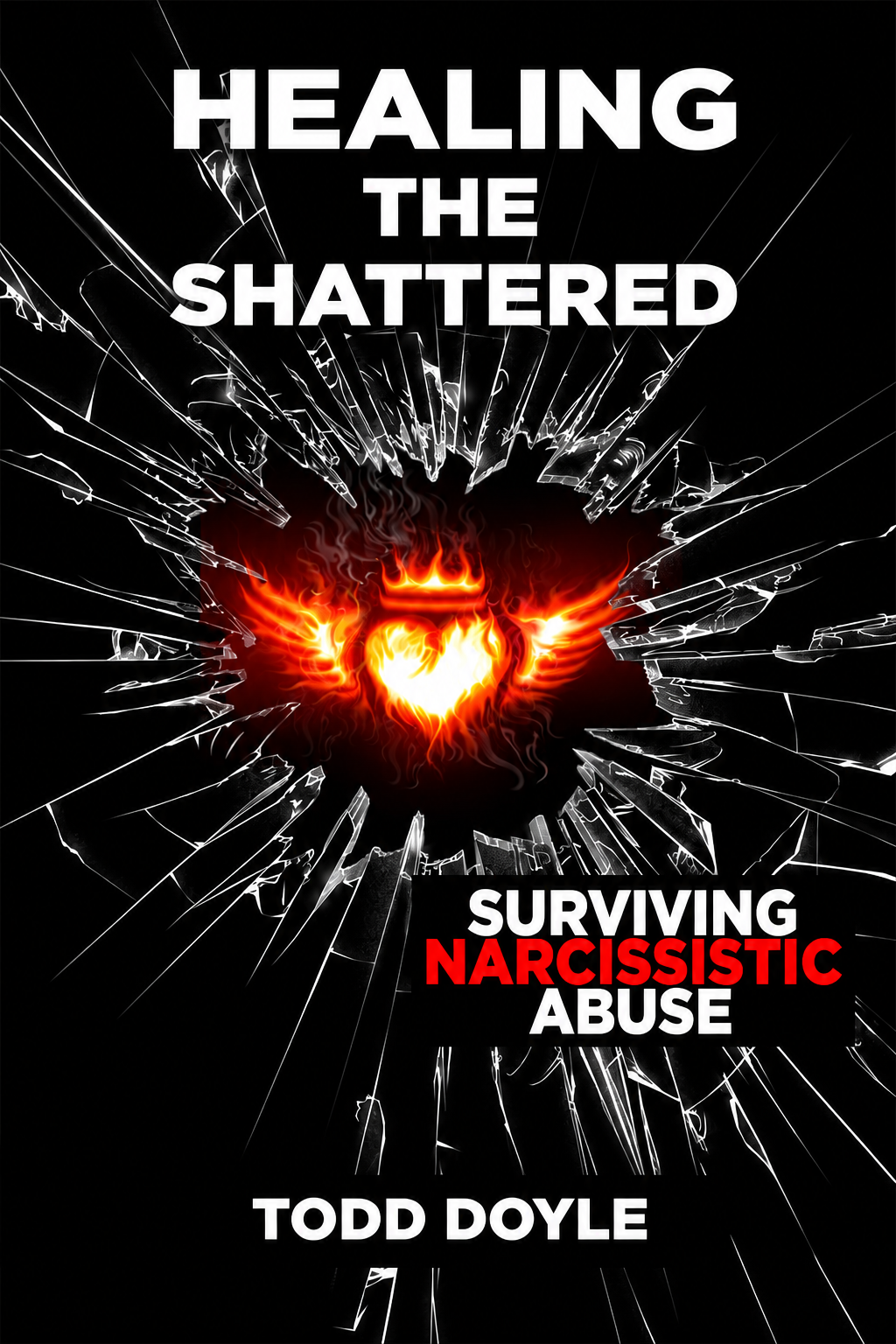
By Todd Doyle, author of Healing the Shattered: Surviving Narcissistic Abuse
You set the boundary. You held it the first time, maybe the second. And somehow you’re still having the same conversation three months later, as though it never happened. A boundary that’s ignored repeatedly isn’t a wording problem, and it rarely gets solved by finding a firmer sentence.
What repetition usually tells you
One violation can be a mistake, a bad day, a misunderstanding. A pattern is different information. If the same limit keeps getting crossed after you’ve named it clearly and responded consistently, that pattern is answering a question you may not have asked out loud yet: is this person capable of respecting a limit they don’t personally agree with?
That’s worth sitting with, because the answer shapes everything that follows. A boundary that’s repeatedly ignored despite consistent follow-through usually isn’t a communication failure on your end.
Before reassessing, check your own follow-through
It’s worth a honest look at whether the boundary has actually been enforced consistently, or whether it’s been restated without consequence. “I’ll end the call if you yell” only becomes real the moment you actually end the call. If the boundary has been repeated several times but never followed through, the pattern may partly reflect that gap rather than the other person’s disregard alone. See Setting Boundaries After Narcissistic Abuse for more on what keeping a boundary actually involves.
Options once the pattern is clear
If you’ve genuinely followed through and the violations continue anyway, a few paths tend to open up, and they aren’t mutually exclusive:
- Raise the cost. A consequence that was easy to absorb the first time may need to become more significant—less time together, more distance, fewer exceptions.
- Narrow what you share. Reducing how much access someone has to your time, information, or decisions can reduce how often they have the opportunity to cross a boundary at all.
- Get outside input. A therapist or support group can offer a view of the pattern that’s harder to see from inside it, particularly if you’ve started to doubt your own read on the situation.
- Reconsider the relationship itself. Not every situation reaches this point, but repeated, consequence-free violations are sometimes the clearest signal that a boundary alone won’t change the dynamic.
None of these require you to decide everything at once. Many survivors move through them gradually, trying a firmer consequence before concluding that distance is the only option that actually works.
A note on safety
If raising the cost of a violation—or pulling back contact—has ever been met with escalation, threats, or retaliation, that changes the calculation considerably. The National Domestic Violence Hotline (800-799-SAFE (7233) or text START to 88788) offers safety planning specific to situations where enforcing a limit carries real risk.
A boundary that keeps getting ignored isn’t evidence that you failed to explain yourself well enough. More often, it’s the clearest evidence you’ll get about what you’re actually dealing with. Healing the Shattered: Surviving Narcissistic Abuse goes further into recognizing that pattern and deciding what to do with it, drawing on my own experience alongside DSM-5 coverage of narcissistic personality disorder — available on Amazon or as a signed copy direct from me.
This article offers general education from a survivor’s perspective. It does not replace individualized safety planning or professional support.
 Buy Paperback on Amazon
 Buy Signed Copy • PayPal